URCAD 2010 Guest Speakers

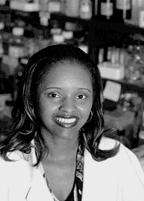
An informal portrait of Crystal in a labCrystal Watkins, M.D., Ph.D.
Post-doctoral Fellow in Neuroscience
The Johns Hopkins University Hospital

Dr. Crystal C. Watkins received both her M.D. and Ph.D. degrees from The Johns Hopkins University School of Medicine under the mentorship of Dr. Solomon Snyder in molecular and cellular neuroscience. She distinguished herself as a young investigator by being accepted as a Society for Neuroscience Fellow, an Academic Medicine Fellow of the National Medical Fellowships and Bristol-Myers Squibb, Inc., and a National Research Service Award recipient from the National Institutes of Mental Health and the NIH. Her thesis research led to a patented discovery for a new treatment for nerve disorders that affect diabetic patients. She was named Outstanding Intern of the Year at the Johns Hopkins/Sinai Program in Internal Medicine. She recently completed her residency in Psychiatry and Behavioral Sciences at the Johns Hopkins University School of Medicine where she served as Chief Resident for the 2007-2008 academic year. Dr. Watkins is currently the Alexander Wilson Schweizer Fellow in Mood Disorders and Neuroimaging as part of the Interdisciplinary training program in Psychiatry, Neuroscience and Radiology at the Johns Hopkins University School of Medicine. Her research focuses on using neuroimaging techniques in small animal models and human clinical investigations to better understand the neurotransmitter pathways involved in mood disorders, psychotic disorders and memory in the aging brain. She employs positron emission tomography (PET) and magnetic resonance imaging (MRI) to specifically study the serotonin transporter and inflammatory markers in families with a genetic susceptibility to bipolar illness, depression and Alzheimer’s dementia.

In addition to her academic accomplishments, Dr. Watkins has a commitment to community education and volunteers with the Adolescent Depression Awareness Program, a school-based initiative at Johns Hopkins to educate high school students, faculty and parents about adolescent depression. She has been actively involved in mentoring programs and has traveled internationally to Guatemala and Ghana to volunteer in underserved areas. She is a member of the American Psychological Association, American Medical Association, the Society for Neuroscience and Alpha Kappa Alpha Sorority, Inc. Dr. Watkins is married to Nicholas Johansson and they have a three-year-old son, Noah.
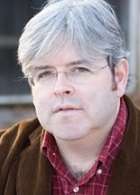

An informal portrait of Richard outside in a gardenRichard Byrne
Member of The Dramatists Guild of America
Editor, UMBC Magazine

Richard Byrne is editor of UMBC Magazine. He is also a playwright. A one-act version of his play about Renaissance alchemy, Burn Your Books, took first prize in the 2007 Prague Playwriting Festival. The full version of the play will receive its world premiere in Washington D.C. on April 30 as a production of Taffety Punk Theatre Company.

Byrne took his B.A. in English at UMBC in December, 1986. He received an M.F.A. in Writing (Poetry and Playwriting) from Washington University in St. Louis in June, 1989. His first play, Untangling Ava, won first prize in Washington University’s 1989 A.E. Hotchner Playwriting Festival and received its world premiere in that university’s Drama Studio in May 1989.

Byrne has worked as an editor and a writer at a number of publications, including The Chronicle of Higher Education, Washington City Paper and Baltimore City Paper. His criticism and essays appear regularly in The Nation, BookForum and The American Prospect. His work has also appeared in the pages of the Washington Post, Foreign Policy and New York Press. Byrne was the recipient of a fellowship for the International Reporting Project in 1999, during which he studied media and government in Bosnia and Serbia.

Prague Castle. 1591 or so. Two alchemists are hung up in iron cages near the Powder Bridge, above the Stag’s Moat, on the command of the Emperor Rudolf. One is a charlatan. One still doesn’t quite know why he’s been condemned to death by starvation. The notorious alchemist Edward Kelley limps by the bridge with a lantern and a walking stick – and a conversation ensues.

That scenario flashed across my mind five years ago, and it inspired me to write a play. It’s called Burn Your Bookes, and it opens in Washington DC on Friday night.

But how did I get from inspiration to completion?

For me, research was the key. The same impulse to investigate, verify, analyze and share that we celebrate on our campus today. I drew on the tools that your professors, lecturers and other professional staff on our campus are helping you to acquire now.

What I found as I researched the world of alchemy expanded the universe of Burn Your Bookes to include poetry, science, diplomatic intrigue and spiritualism too.

Research helped me find fresh clues to solve old riddles, and led me to new theories about what Edward Kelley and other alchemists were up to in their workshops. It also helped me dramatize the life story of Kelley’s stepdaughter, Elizabeth Jane Weston, one of the few women to publish poetry in the Renaissance. Her connection to Edward Kelley was a mystery hiding in plain sight until the early 20th century – but her life and poems and letters hold important information about Kelley’s life and death.

Research is essential to write any play on a historical theme, especially one as complex as alchemy. The English historian Charles Nicholl writes that “Like all occult systems, alchemy employs a language of symbolism and subterfuge. You enter a linguistic labyrinth full of cross-references and false trails. Its strange and wonderful images — its green lions and red kings, its nigredos and albedos, its lactating virgins and cannibalistic couplings — have a multiplicity of interpretations and counter-interpretations.”

Navigating such territory requires careful analysis of texts and their contexts. Some of the works of Edward Kelley’s main employer, the Renaissance polymath John Dee (for instance), are so complex, arcane and mysterious that they are still being interpreted and argued about to this day.

Kelley and Dee also inhabited a world where there was considerable overlap between the occult and science. The late English historian Christopher Hill put it this way: “We cannot separate the early history of science from the history of magic, cannot give prizes to good rationalists as against bad magicians, astrologers, alchemists… If an Elizabethan wanted gold, he could raid the Spanish Main, or he could practice alchemy. Sir Walter Ralegh tried the one, John Dee the other: [Queen Elizabeth’s minister] Sir William Cecil invested in both.

One cannot write convincingly about the world of Kelley, Dee and alchemy without attempting to enter it. Research is the door through which one must walk – wide reading both in the texts of the period and the contemporary scholarship that helps set them in context.

So what are some of the principles of research in the humanities that I revisited as I wrote Burn Your Bookes?

First, reexamine primary sources. They retain insights still untapped by other scholars who’ve worked over these materials. Rereading Edward Kelley’s treatises on the philosopher’s stone and his letters to Queen Elizabeth’s ministers or delving into John Dee’s transcriptions of his “conversations” with spirits revealed new vistas – and these documents also gave me sense of each man’s character and the actual language that he used to express it.

And if you can, seek out original documents in libraries and archives. Holding Elizabeth Jane Weston’s books of poetry at Harvard University and the Folger Shakespeare Library in my own hands was inspiring. But seeing the engravings on the frontispiece of Weston’s books, and comparing the differences between versions of the books, opened up new plot points for my play. Examining a book owned by John Dee at the Folger – filled with his copious marginalia – brought home to me Dee’s ferocious pursuit of knowledge, which lingers still in the sharp and deep etchings made by his pen on the pages.

Second, don’t be afraid to challenge or argue with contemporary research. Previous research compels our respect and attention, but the process of knowing stops if we accept any work on complex or unsettled matters as truths or settled fact. Let that research inform you as you pursue your own quest. Engage with it. Be guided and instructed by its successes. But do not rest upon it.

Third, be dogged. As part of my research, I wanted to read a book called Basilica Chemica by Renaissance alchemist and physician Oswald Croll – who was an acquaintance of both Kelley and Weston. The Basilica was published in Latin, and there is no contemporary translation of it. But I discovered that the Library of Congress and the Folger Shakespeare Library both had copies of a 17th century English translation. It was one of the most important finds of my research – a treasure trove of alchemical recipes – and notes by the translator on which recipes he’d tried himself.

My last observation is to encourage you to continue to kindle the spark of curiosity within yourself. Use research – and the self-discipline that is required to do it right – to fortify that spark and make it more visible to others. It is a privilege to have the time and resources to do the work that we do. Whether you are a humanist, a social scientist, or scientist, keep doing useful things with this time and these resources. And remember to have fun as you do it. I have.